
The Mothers' Houses and Inherited Violence
The CageThe killer’s history in his parents’ home reveals how he reframes childhood violence as justification, without making the cycle he creates any less deliberate.
increasing Bearing strength in each event
 decreasing
Bearing strength in each eventdecreasingA Childhood Under Violence
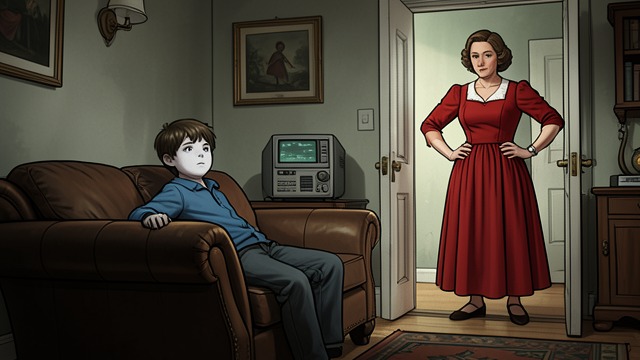
A Boy Hiding at Home
Violence Behind Closed Doors
Ken remembers his father beating his mother and then abusing her while he watched. He hid beneath furniture or behind curtains, sometimes becoming the target of his father’s anger after the assault.
His memories place violence within the family home, where the child had little power to intervene. They explain the history Ken later recalls, but do not establish that his future crimes were inevitable.
The Failure of Protection
Ken remembers his mother doing nothing to save him, a grievance that becomes central to his later account of her death. The remembered failure of protection shapes his sense of power without excusing what he chooses to do.
The Mother Is Killed
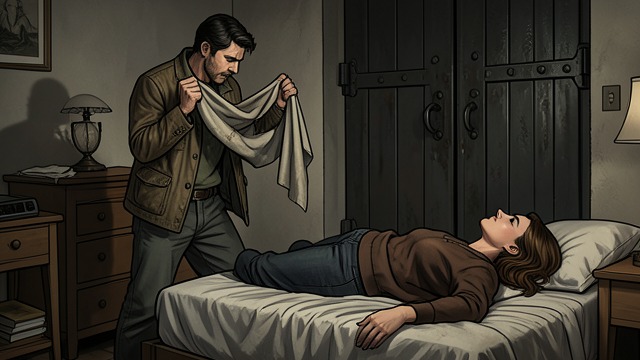
A Past Crime Concealed
A Death Recast
Ken says that his mother became ill and needed more care than he was willing to provide. He put a bag over her head and describes her death as a practical decision, claiming she did not struggle much.
He interprets the act as the end of a difficult situation rather than murder. His account reveals how he turns harm into self-serving language that denies the victim’s autonomy.
A Private Precedent
Afterward, he orders a large dog cage and begins keeping women in the loft. The earlier killing becomes part of the private history he uses to normalize later violence, though it remains his choice to repeat and expand it.
The Mother's House Preserved
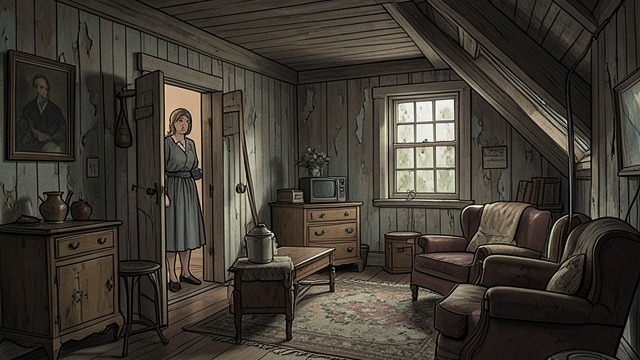
A Room Left Untouched
A House Closed to Rachel
Keith Warner refuses his wife access to his late mother’s house and becomes angry when she suggests clearing it for sale. Rachel notices that his secrecy is unusual and begins to wonder what he hides there.
The property remains a domestic space preserved around the absent mother, with old furniture and drawers that Keith protects from scrutiny. His attachment to the house becomes the thread that leads police toward the trophies.
Home as an Archive
The house stores more than family memories. It eventually reveals evidence connecting Keith to stolen belongings and dead women, turning a private inheritance into a crime scene.
The Sideboard Opens
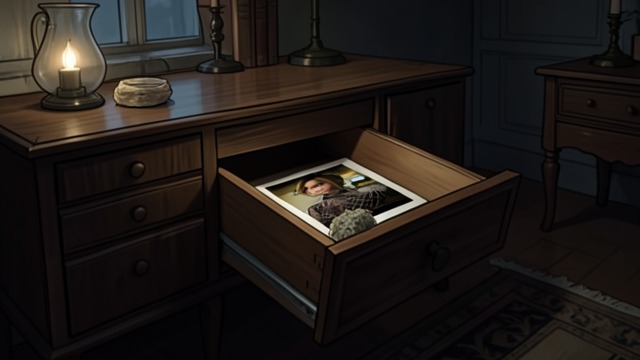
Objects Expose the Past
A Hidden Drawer
While police search Keith’s mother’s house, Eve notices his attention shift toward the sideboard. The officers open drawers and find Zoe Hardy’s photograph alongside preserved body parts and other mementos.
The carefully retained objects make the house a record of crimes that Keith wanted to keep private. The family furniture is no longer only an inheritance; it has become a container for evidence.
Memory Without Excuse
The story juxtaposes Ken’s childhood memories with the harm he inflicts, showing how people can reinterpret past suffering to justify present domination. A history of violence may shape a person, but it does not absolve the person who chooses to reproduce it.
The Pattern Is Broken by Witnesses
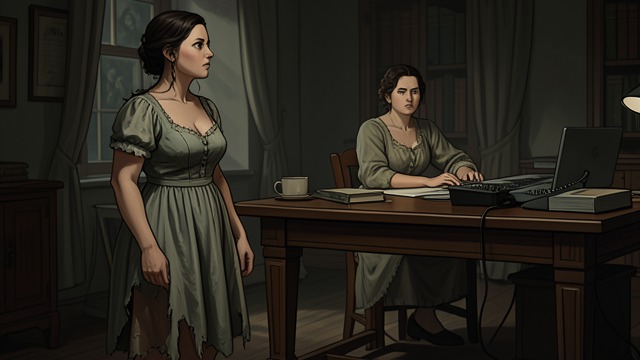
Violence Is Not Destiny
Testimony Against the Private Story
Ken’s childhood account is known only through his own interpretation, while the survivors describe the choices he made against them. Jill and Zoe’s accounts identify deliberate restraints, assaults, threats, and preparation.
Their testimony refuses to let the killer’s explanation become the only account of his life. The evidence also distinguishes understanding the origins of violence from accepting the excuses offered for it.
The Captives Choose Differently
The women help one another rather than repeating the isolation and abandonment Ken remembers from childhood. Their cooperation suggests that survival under violence can produce solidarity, not simply another generation of abuse.
Years before the murders
Before the murders
Friday 23 February
Saturday 3 March
After Saturday 3 March
